
Gochujang Pork Belly Ramen Wagamama UK: Price, Nutrition & Review
Introduction
Looking for a ramen bowl that combines bold Korean flavors with Japanese comfort food? Gochujang Pork Belly Ramen is one of the richest and most flavorful dishes on the Wagamama UK menu, featuring tender pork belly, soft ramen noodles, fresh vegetables, and a savory broth infused with authentic Korean gochujang chilli paste. Every spoonful delivers the perfect balance of sweet, spicy, smoky, and umami flavors that create a memorable dining experience.
Unlike traditional ramen, this dish introduces the bold taste of gochujang, a famous Korean fermented chilli paste known for its deep, slightly sweet heat and rich umami character. Combined with juicy pork belly, silky ramen noodles, and crisp vegetables, the result is a hearty bowl that’s satisfying from the first bite to the last.
Whether you’re searching for the latest Wagamama Gochujang Pork Belly Ramen price, checking its nutritional value, or planning to recreate it at home, this comprehensive guide covers everything you need to know. You’ll discover its ingredients, nutrition facts, allergen information, homemade recipe, health benefits, taste profile, and expert review.
Gochujang Pork Belly Ramen Wagamama Menu Price (UK)
Gochujang Pork Belly Ramen is one of Wagamama UK’s premium ramen dishes, combining Korean-inspired flavors with Japanese ramen traditions. Thanks to its tender pork belly, rich broth, and generous serving size, it remains a popular choice for customers looking for a warming and indulgent meal.
| Item | Price (Approx.) |
|---|---|
| Gochujang Pork Belly Ramen | £16.95–£18.95* |
Note: Prices may vary depending on restaurant location, seasonal menu updates, and promotional offers. Always check the official Wagamama UK menu for the latest pricing.
What Is Gochujang Pork Belly Ramen?
Gochujang Pork Belly Ramen is a Korean-inspired Japanese noodle soup featuring tender pork belly served in a rich broth flavored with gochujang chilli paste, soft ramen noodles, and fresh vegetables. It combines the comforting qualities of traditional ramen with the bold, sweet-spicy flavors of Korean cuisine.
The dish’s signature ingredient is gochujang, a fermented Korean chilli paste made from red chillies, glutinous rice, fermented soybeans, and salt. Unlike ordinary chilli sauce, gochujang offers layers of sweetness, umami, and mild smokiness that develop beautifully within the broth.
Slow-cooked pork belly provides another defining feature. The meat becomes exceptionally tender while retaining its rich flavor and juicy texture. As it absorbs the spicy broth, every bite becomes deeply flavorful without becoming overly spicy.
Fresh ramen noodles are cooked until perfectly tender with a slight chew, allowing them to soak up the rich broth. Crisp vegetables such as pak choi, bean sprouts, sweetcorn, and spring onions add freshness and natural sweetness that balance the richness of the pork.
The combination of Korean spices, Japanese noodles, and premium pork creates a luxurious ramen bowl that’s both comforting and exciting, making it one of the standout dishes on the Wagamama UK menu.
Taste and Flavor Profile of Gochujang Pork Belly Ramen
Gochujang Pork Belly Ramen delivers a rich combination of savory broth, tender pork, fresh vegetables, and authentic Korean spices that create an unforgettable bowl of ramen.
Rich Gochujang Broth
The broth is deeply savory with layers of umami, sweetness, and gentle chilli heat. Gochujang adds complexity without overwhelming the natural flavors of the pork and vegetables.
Tender Pork Belly
The pork belly is slow-cooked until incredibly soft and juicy. Its rich, buttery texture melts in your mouth while absorbing the flavorful broth.
Soft Ramen Noodles
Fresh ramen noodles remain springy and tender, soaking up the broth while maintaining their satisfying bite.
Fresh Vegetables
Fresh vegetables provide crisp texture, natural sweetness, and vibrant color that balance the richness of the pork belly and broth.
Sweet, Spicy, and Smoky Balance
Unlike dishes that focus only on heat, Gochujang Pork Belly Ramen delivers a balanced flavor profile. Sweet notes from the gochujang complement the savory broth, while subtle smokiness enhances every spoonful.
Medium Spice Level
The spice level is generally considered medium. It provides pleasant warmth suitable for most diners while allowing the other ingredients to shine.
Luxurious Dining Experience
Every ingredient works together to create a premium restaurant-quality meal that’s both comforting and packed with bold Korean-inspired flavors.
Ingredients Used in Gochujang Pork Belly Ramen
Although Wagamama’s exact recipe remains confidential, the dish is believed to include carefully selected premium ingredients that contribute to its signature taste.
Main Ingredients
- Slow-cooked pork belly
- Fresh ramen noodles
- Gochujang broth
- Seasonal vegetables
- Spring onions
These ingredients create the hearty foundation of the dish while balancing flavor, texture, and nutrition.
Gochujang BrothThe rich broth commonly includes:
- Chicken or pork stock
- Korean gochujang paste
- Soy sauce
- Garlic
- Fresh ginger
- Sesame oil
- Chilli oil
These ingredients combine to produce a flavorful broth with deep umami, gentle heat, and subtle sweetness.
Vegetables
Typical vegetables include:
- Pak choi
- Bean sprouts
- Sweetcorn
- Spring onions
These vegetables add freshness, crunch, vitamins, and natural sweetness that complement the spicy broth.
Seasonings
Additional seasonings may include:
- Garlic
- Ginger
- Soy sauce
- Sesame oil
- White pepper
- Chilli flakes
These seasonings build the broth’s aromatic profile while enhancing its Korean-inspired character.
Garnishes
The finished bowl is often garnished with:
- Spring onions
- Sesame seeds
- Fresh coriander
- Extra chilli oil (optional)
These garnishes improve both presentation and flavor while adding freshness and texture.
Why These Ingredients Work Together
Each ingredient contributes to the overall balance of the dish. Slow-cooked pork belly provides richness and tenderness, while the fermented gochujang paste delivers authentic Korean flavor with sweet, spicy, and umami notes. Fresh ramen noodles absorb the flavorful broth, creating satisfying bites packed with taste. Crisp vegetables lighten the richness of the pork, while garlic, ginger, soy sauce, and sesame oil add aromatic depth. Together, these ingredients create a luxurious ramen bowl that’s bold, comforting, and full of authentic Asian-inspired flavors.
Nutritional Information
Gochujang Pork Belly Ramen is one of the richest and most indulgent ramen dishes on the Wagamama UK menu. Combining tender pork belly, soft ramen noodles, fresh vegetables, and a Korean-inspired gochujang broth, it provides a satisfying balance of protein, carbohydrates, and healthy fats while delivering bold sweet, spicy, and umami flavors.
The nutritional values below are sourced from the official Wagamama UK nutritional information to ensure accuracy.
Gochujang Pork Belly Ramen Nutrition Facts
| Nutrient | Per Dish | Per 100g |
|---|---|---|
| Energy | 953 kcal | 119 kcal |
| Energy | 3,867 kJ | 485 kJ |
| Protein | 37.2 g | 4.7 g |
| Carbohydrates | 93.1 g | 11.7 g |
| Of Which Sugars | 22.9 g | 2.9 g |
| Fat | 47.1 g | 5.9 g |
| Saturated Fat | 14.3 g | 1.8 g |
| Sodium | 2.6 g | 0.3 g |
| Salt | 6.4 g | 0.8 g |
| Fibre | 4.5 g | 0.6 g |
Note: The Gochujang Pork Belly Ramen nutritional information on this page is sourced from the official Wagamama UK website to maintain accuracy and avoid incorrect nutritional claims.
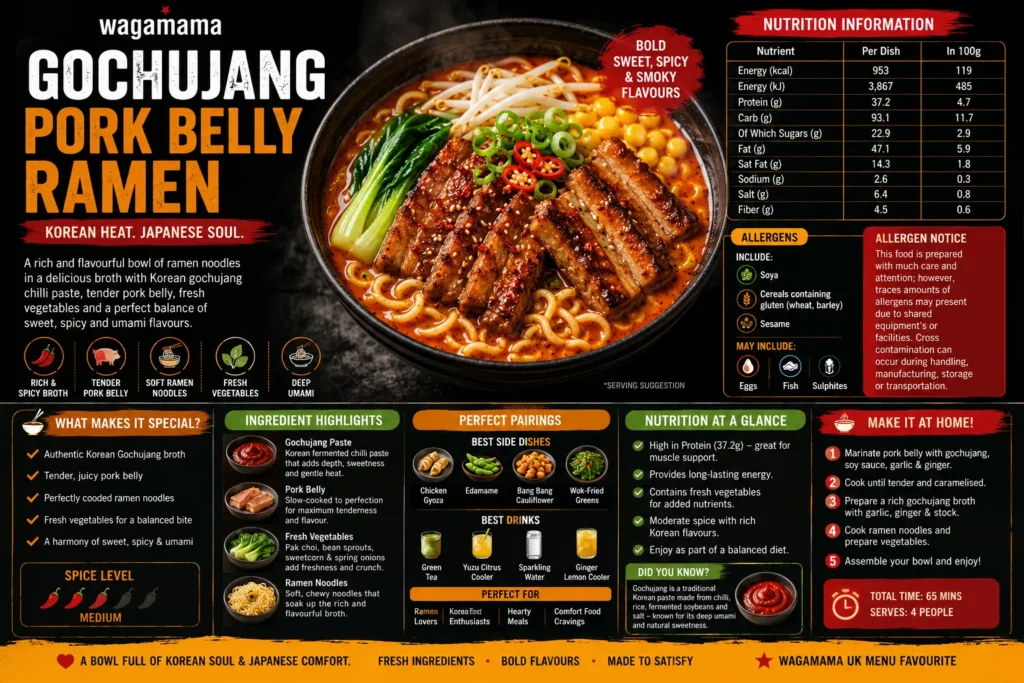
Understanding the Nutrition Facts
Calories
One serving contains 953 calories, making it one of the most energy-rich ramen dishes available on the Wagamama menu. It is ideal for customers looking for a hearty and filling meal.
Protein
With 37.2 grams of protein, the dish provides an excellent amount of high-quality protein from the pork belly, supporting muscle maintenance and helping you stay full for longer.
Carbohydrates
The 93.1 grams of carbohydrates come primarily from the ramen noodles, providing sustained energy while complementing the rich broth.
Fat
Containing 47.1 grams of fat, Gochujang Pork Belly Ramen is richer than most other ramen options due to the naturally fatty pork belly and flavorful broth.
Saturated Fat
The dish contains 14.3 grams of saturated fat, which reflects the rich nature of pork belly. Customers monitoring saturated fat intake should enjoy it in moderation.
Sugar
The 22.9 grams of sugar come largely from the gochujang paste, vegetables, and seasoning ingredients. This sweetness balances the savoury and spicy flavors beautifully.
Fibre
Each serving provides 4.5 grams of fibre, contributed by the vegetables and noodles. Fibre helps support healthy digestion and adds to the meal’s satisfying nature.
Salt
Like many ramen dishes, Gochujang Pork Belly Ramen contains 6.4 grams of salt, mainly from soy sauce, broth, and seasoning ingredients.
Who Is Gochujang Pork Belly Ramen Best Suited For?
This dish is ideal for:
- Customers who enjoy rich, hearty ramen.
- Fans of Korean-inspired flavors.
- Diners looking for a filling comfort meal.
- Pork lovers.
- People who enjoy sweet and spicy combinations.
- Customers seeking a premium ramen experience.
Because it contains gluten, soy, and sesame, it is not suitable for gluten-free diets or individuals with these allergies.
Allergen Information
If you have food allergies or dietary restrictions, always review the allergen information before ordering.
Contains
Gochujang Pork Belly Ramen contains:
- Soya
- Cereals Containing Gluten (Wheat, Barley)
- Sesame
These allergens are naturally present in the noodles, broth, and seasoning ingredients.
May Contain
Due to shared kitchen equipment and preparation facilities, the dish may also contain traces of:
- Eggs
- Fish
- Sulphites
Allergen Notice
This food is prepared with much care and attention. However, trace amounts of allergens may be present because of shared equipment or facilities. Cross-contamination may occur during handling, manufacturing, storage, transportation, or cooking.
Customers with severe food allergies should always inform restaurant staff before ordering and consult the latest official Wagamama allergen guide.
Why Customers Love Gochujang Pork Belly Ramen
Gochujang Pork Belly Ramen has become one of Wagamama’s standout premium ramen dishes because of its rich ingredients and bold Korean-inspired flavors.
Rich Korean Gochujang Broth
The broth offers the perfect balance of sweetness, spice, smokiness, and umami. It delivers plenty of flavor without becoming overwhelmingly hot.
Tender Pork Belly
Slow-cooked pork belly remains juicy, soft, and incredibly flavorful. Its rich texture makes every bite satisfying.
Authentic Korean Flavor
Many customers enjoy experiencing the unique taste of fermented gochujang, which brings complexity rarely found in traditional ramen.
Filling Portion
With generous noodles, pork belly, vegetables, and broth, the dish provides an extremely satisfying meal.
Perfect Balance of Sweet and Spicy
The sweetness of the gochujang complements the savoury broth while adding just enough warmth for spice lovers.
Premium Presentation
Fresh vegetables, glossy pork belly, sesame seeds, and vibrant broth create an attractive bowl that’s popular on social media.
Comfort Food
Its rich broth and hearty ingredients make it a favourite during colder weather or whenever customers crave something warm and indulgent.
Is Gochujang Pork Belly Ramen Healthy?
Gochujang Pork Belly Ramen can certainly be enjoyed as part of a balanced diet, although it is one of the richer options on the Wagamama menu.
Health Benefits
High Protein
Containing 37.2 grams of protein, the dish supports muscle maintenance and promotes fullness.
Fresh Vegetables
Pak choi, bean sprouts, spring onions, and sweetcorn contribute vitamins, minerals, antioxidants, and natural fibre.
Rich Energy Source
Its combination of protein, carbohydrates, and healthy fats provides long-lasting energy.
Authentic Ingredients
The use of fermented gochujang adds unique flavor while contributing traditional Korean culinary elements.
Things to Consider
Higher Calories
At 953 calories, this is one of the most energy-dense ramen dishes available.
Higher Fat
Pork belly naturally contains more fat than chicken or beef, increasing the dish’s richness.
Higher Sodium
The broth contains a relatively high amount of sodium from soy sauce and seasoning ingredients.
Contains Gluten
Traditional ramen noodles are made from wheat flour and are unsuitable for gluten-free diets.
Best Side Dishes to Pair with Gochujang Pork Belly Ramen
These Wagamama side dishes pair beautifully with the bold flavors of Gochujang Pork Belly Ramen.
| Side Dish | Why It Pairs Well |
|---|---|
| Chicken Gyoza | Classic Japanese pairing. |
| Edamame | Adds freshness and extra protein. |
| Bang Bang Cauliflower | Complements the spicy broth. |
| Wok-Fried Greens | Balances the richness of the pork belly. |
| Rainbow Pickles | Refreshes the palate between bites. |
| Duck Gyoza | Adds another layer of rich flavour. |
| Miso Soup | A light starter before the ramen. |
How Does Gochujang Pork Belly Ramen Compare to Similar Dishes?
| Dish | Protein | Calories | Spice Level | Broth Style | Best For |
|---|---|---|---|---|---|
| Gochujang Pork Belly Ramen | 37.2g | 953 | 🌶🌶🌶 | Korean Gochujang | Rich Korean flavors |
| Kare Buroso Ramen | 30g | 706 | 🌶 | Japanese Curry | Creamy ramen lovers |
| Chilli Chicken Ramen | 43.4g | 575 | 🌶🌶 | Spicy Chicken Broth | Lean protein |
| Tantanmen Beef Brisket Ramen | 36.6g | 714 | 🌶🌶 | Creamy Sesame | Rich sesame broth |
| Grilled Chicken Ramen | 40g | 490 | 🌶 | Chicken Broth | Healthy ramen choice |
Which One Should You Choose?
Choose Gochujang Pork Belly Ramen if you:
- Enjoy Korean-inspired cuisine.
- Love rich pork belly.
- Prefer medium spicy ramen.
- Want a hearty comfort meal.
- Like sweet, savoury, and smoky flavors in one bowl.
If you’re looking for one of the richest and most indulgent ramen dishes on the Wagamama UK menu, Gochujang Pork Belly Ramen is an outstanding choice that combines authentic Korean flavours with Japanese ramen traditions.
How to Make Gochujang Pork Belly Ramen at Home
If you love the bold flavors of Wagamama Gochujang Pork Belly Ramen, you can recreate a similar restaurant-style bowl in your own kitchen using fresh ingredients and a few simple cooking techniques. While Wagamama’s exact recipe remains confidential, this homemade version captures the rich Korean-inspired gochujang broth, tender pork belly, soft ramen noodles, and fresh vegetables that make this dish unforgettable.
The secret to this ramen lies in balancing the sweetness, spice, and umami of gochujang paste with a rich stock, soy sauce, garlic, and ginger. Slow-cooked pork belly becomes incredibly tender while absorbing the flavorful broth, and fresh ramen noodles soak up every drop of the delicious soup.
Whether you’re preparing a comforting weekend dinner or impressing guests with authentic Asian-inspired cuisine, this recipe delivers restaurant-quality results with ingredients available in most supermarkets.
Preparation Time
- Preparation Time: 25 minutes
- Cooking Time: 40 minutes
- Total Time: 1 hour 5 minutes
- Servings: 4 people
Ingredients
For the Pork Belly
- 600g pork belly slices
- 2 tablespoons soy sauce
- 1 tablespoon sesame oil
- 2 cloves garlic, minced
- 1 tablespoon grated fresh ginger
- 1 tablespoon gochujang paste
- 1 teaspoon brown sugar
- Black pepper to taste
For the Gochujang Broth
- 1.5 litres chicken or pork stock
- 2 tablespoons gochujang paste
- 2 tablespoons soy sauce
- 1 tablespoon sesame oil
- 2 cloves garlic, finely chopped
- 1 tablespoon grated ginger
- 1 teaspoon rice vinegar
- 1 teaspoon chilli oil (optional)
- White pepper
For the Ramen Bowl
- 4 portions fresh ramen noodles
- Pak choi
- Bean sprouts
- Sweetcorn
- Spring onions
- Sesame seeds
- Fresh coriander
- Crispy fried onions (optional)
Step by Step Instructions
Step 1: Marinate the Pork Belly
In a bowl combine:
- Soy sauce
- Sesame oil
- Gochujang paste
- Garlic
- Ginger
- Brown sugar
- Black pepper
Coat the pork belly slices thoroughly.
Leave to marinate for 30 minutes.
Step 2: Cook the Pork Belly
Heat a frying pan over medium heat.
Cook the pork belly for 8–10 minutes, turning occasionally until caramelised and cooked through.
Remove from the pan and slice into bite-sized pieces if necessary.
Step 3: Prepare the Broth
Heat sesame oil in a saucepan.
Add:
- Garlic
- Ginger
Cook until fragrant.
Stir in:
- Gochujang paste
- Soy sauce
Slowly add the stock while stirring continuously.
Add:
- Rice vinegar
- White pepper
- Chilli oil (optional)
Simmer gently for 15–20 minutes.
Step 4: Cook the Ramen Noodles
Bring a saucepan of water to the boil.
Cook the ramen noodles according to the package instructions.
Usually 3–4 minutes is sufficient.
Drain immediately.
Step 5: Prepare the Vegetables
Blanch the pak choi for one minute.
Wash the bean sprouts.
Drain the sweetcorn.
Slice the spring onions finely.
Step 6: Assemble the Ramen
Divide the noodles between four serving bowls.
Pour over the hot gochujang broth.
Arrange the pork belly slices neatly on top.
Add:
- Pak choi
- Bean sprouts
- Sweetcorn
Finish with:
- Spring onions
- Sesame seeds
- Fresh coriander
- Crispy fried onions
Serve immediately while steaming hot.
Chef Tips for Restaurant Style Gochujang Pork Belly Ramen
Use Authentic Korean Gochujang
Authentic Korean gochujang paste provides deeper flavor than ordinary chilli sauce and gives the broth its signature sweet, spicy, and umami taste.
Don’t Rush the Pork Belly
Allow the pork belly to cook slowly until caramelised around the edges while remaining juicy inside.
Balance the Broth
Taste the broth before serving.
If it’s too spicy:
- Add a little extra stock.
If it’s too mild:
- Stir in a small amount of additional gochujang.
Cook Noodles Separately
Preparing the noodles separately prevents them from becoming overly soft and keeps the broth clear.
Assemble Immediately Before Serving
Freshly assembled ramen always delivers the best texture and presentation.
Common Mistakes to Avoid
Overcooking the Pork Belly
Cooking for too long can dry the meat.
Aim for juicy slices with lightly caramelised edges.
Using Too Much Gochujang
Although delicious, excessive gochujang can overpower the broth.
Always add gradually.
Overcooking the Noodles
Soft noodles lose their signature chewy texture.
Cook only until just tender.
Skipping the Marinade
Marinating the pork belly develops much richer flavor.
Using Weak Stock
A high-quality stock forms the foundation of excellent ramen.
Choose homemade or premium stock whenever possible.
Ingredient Substitutions
| Original Ingredient | Substitute |
|---|---|
| Pork belly | Chicken thighs |
| Fresh ramen noodles | Dried ramen noodles |
| Gochujang paste | Mild chilli paste (less authentic) |
| Pork stock | Chicken stock |
| Sesame oil | Neutral vegetable oil |
| Pak choi | Baby spinach |
| Rice vinegar | Apple cider vinegar |
Storage Instructions
If you have leftovers:
- Refrigerate within 2 hours.
- Store the broth, pork belly, and noodles separately.
- Consume within 3 days.
- Freeze the broth and pork separately for up to 2 months.
- Avoid freezing cooked ramen noodles because they become soft after thawing.
Reheating Instructions
Broth
Heat gently over medium heat until steaming.
Do not boil vigorously.
Pork Belly
Warm the pork slices inside the broth until heated through.
Noodles
Prepare fresh noodles whenever possible.
If reheating cooked noodles, dip them briefly into boiling water for 20–30 seconds.
Homemade vs Wagamama Gochujang Pork Belly Ramen
| Feature | Homemade Version | Wagamama Version |
|---|---|---|
| Cost | Lower | Higher |
| Portion Size | Fully customizable | Fixed serving |
| Spice Level | Adjustable | Signature recipe |
| Freshness | Homemade | Freshly prepared |
| Sodium Level | Can be reduced | Standard recipe |
| Cooking Time | Around 65 minutes | Ready to serve |
| Customisation | Excellent | Limited |
| Convenience | Requires cooking | Restaurant ready |
Pro Tips for Making It Taste Like Wagamama
To create a bowl that’s closer to Wagamama’s signature version, follow these expert techniques:
- Use authentic Korean gochujang paste rather than generic chilli sauce.
- Cook the pork belly until lightly caramelised for maximum flavor.
- Prepare the broth using high-quality chicken or pork stock.
- Add garlic and fresh ginger before the stock to develop deeper aroma.
- Cook ramen noodles separately to preserve their springy texture.
- Add vegetables only at the end so they remain bright and slightly crisp.
- Finish the bowl with toasted sesame seeds and fresh spring onions.
- Serve with Chicken Gyoza or Edamame to enjoy a complete Wagamama-inspired dining experience.
Using these techniques, you can prepare a homemade Gochujang Pork Belly Ramen that’s rich, comforting, and bursting with authentic Korean-inspired flavors while closely resembling the restaurant version.
Expert Review of Gochujang Pork Belly Ramen
Gochujang Pork Belly Ramen is one of the boldest and most indulgent noodle dishes on the Wagamama UK menu. Inspired by the rich flavors of Korean cuisine, this ramen combines tender pork belly, soft ramen noodles, crisp vegetables, and a deeply flavorful broth infused with authentic gochujang chilli paste. The result is a bowl that perfectly balances sweetness, spice, smokiness, and umami in every bite.
Unlike traditional ramen, which often relies on soy or miso for its base, this dish showcases the distinctive character of fermented Korean gochujang. The pork belly adds richness and depth, while the vegetables bring freshness that prevents the meal from feeling overly heavy. If you enjoy hearty ramen with bold Asian flavors, this is one of Wagamama’s standout creations.
Frequently Asked Questions
What is Gochujang Pork Belly Ramen?
Gochujang Pork Belly Ramen is a Japanese-inspired noodle soup featuring tender pork belly, fresh ramen noodles, vegetables, and a rich broth flavored with authentic Korean gochujang chilli paste.
How much does Gochujang Pork Belly Ramen cost at Wagamama UK?
The average price is approximately £16.95–£18.95, although prices may vary by restaurant location and seasonal menu changes.
How many calories are in Gochujang Pork Belly Ramen?
According to the official Wagamama nutritional information, one serving contains 953 calories (kcal).
Is Gochujang Pork Belly Ramen spicy?
Yes. It has a medium spice level. The gochujang paste creates warming heat balanced by sweetness and deep umami flavor rather than intense chilli burn.
Does Gochujang Pork Belly Ramen contain allergens?
Yes. It contains soya, cereals containing gluten (wheat and barley), and sesame. Due to shared preparation facilities, it may also contain traces of eggs, fish, and sulphites.
Can I make Gochujang Pork Belly Ramen at home?
Yes. You can prepare a similar version using pork belly, gochujang paste, ramen noodles, garlic, ginger, soy sauce, sesame oil, and fresh vegetables. Although Wagamama’s exact recipe is proprietary, the homemade recipe in this guide recreates its signature flavors very closely.
Is Gochujang Pork Belly Ramen healthy?
It can be enjoyed as part of a balanced diet. The dish provides 37.2 grams of protein and fresh vegetables, but it is also relatively high in calories, fat, and sodium because of the pork belly and rich broth.
What does Gochujang Pork Belly Ramen taste like?
It has a rich combination of sweet, spicy, smoky, and savory flavors. The pork belly is juicy and tender, while the gochujang broth delivers authentic Korean-inspired umami with a smooth finish.
What side dishes pair best with Gochujang Pork Belly Ramen?
Popular choices include:
- Chicken Gyoza
- Edamame
- Bang Bang Cauliflower
- Rainbow Pickles
- Wok-Fried Greens
- Duck Gyoza
These sides complement the bold broth while adding variety to the meal.
Can Gochujang Pork Belly Ramen be reheated?
Yes. Store the broth, pork belly, and noodles separately. Reheat the broth gently and prepare fresh noodles whenever possible for the best texture.
Is Gochujang Pork Belly Ramen suitable for fitness enthusiasts?
Although it’s high in protein, it also contains higher calories and fat due to the pork belly. Active individuals can enjoy it as an occasional high-energy meal within a balanced diet.
What drink pairs best with Gochujang Pork Belly Ramen?
Green tea, jasmine tea, sparkling water, yuzu lemonade, and ginger-based drinks pair particularly well because they refresh the palate and balance the richness of the broth.
Conclusion
Gochujang Pork Belly Ramen is one of the richest and most flavorful dishes on the Wagamama UK menu. Combining tender pork belly, authentic Korean gochujang paste, fresh vegetables, soft ramen noodles, and a deeply satisfying broth, it delivers a unique fusion of Korean and Japanese flavors. The balance of sweetness, spice, smokiness, and umami creates a memorable dining experience for anyone who enjoys bold Asian cuisine.
From a nutritional perspective, the dish provides 953 calories, 37.2 grams of protein, and a generous serving of fresh vegetables, making it a hearty and filling meal. While it contains allergens such as soya, gluten, and sesame, the detailed allergen guide included in this article helps customers make informed choices. The homemade recipe also makes it possible to recreate a similar restaurant-style bowl using fresh ingredients in your own kitchen.
Whether you’re looking for the latest Wagamama Gochujang Pork Belly Ramen price, checking its nutritional information, or searching for an authentic Korean-inspired ramen recipe, this dish is an outstanding option. Its premium ingredients, rich broth, and comforting flavors make it one of the most indulgent ramen bowls available at Wagamama UK.
You Might Also Like
Looking for more? Browse the full Wagamama Ramen Menu.